

What Is Retatrutide?
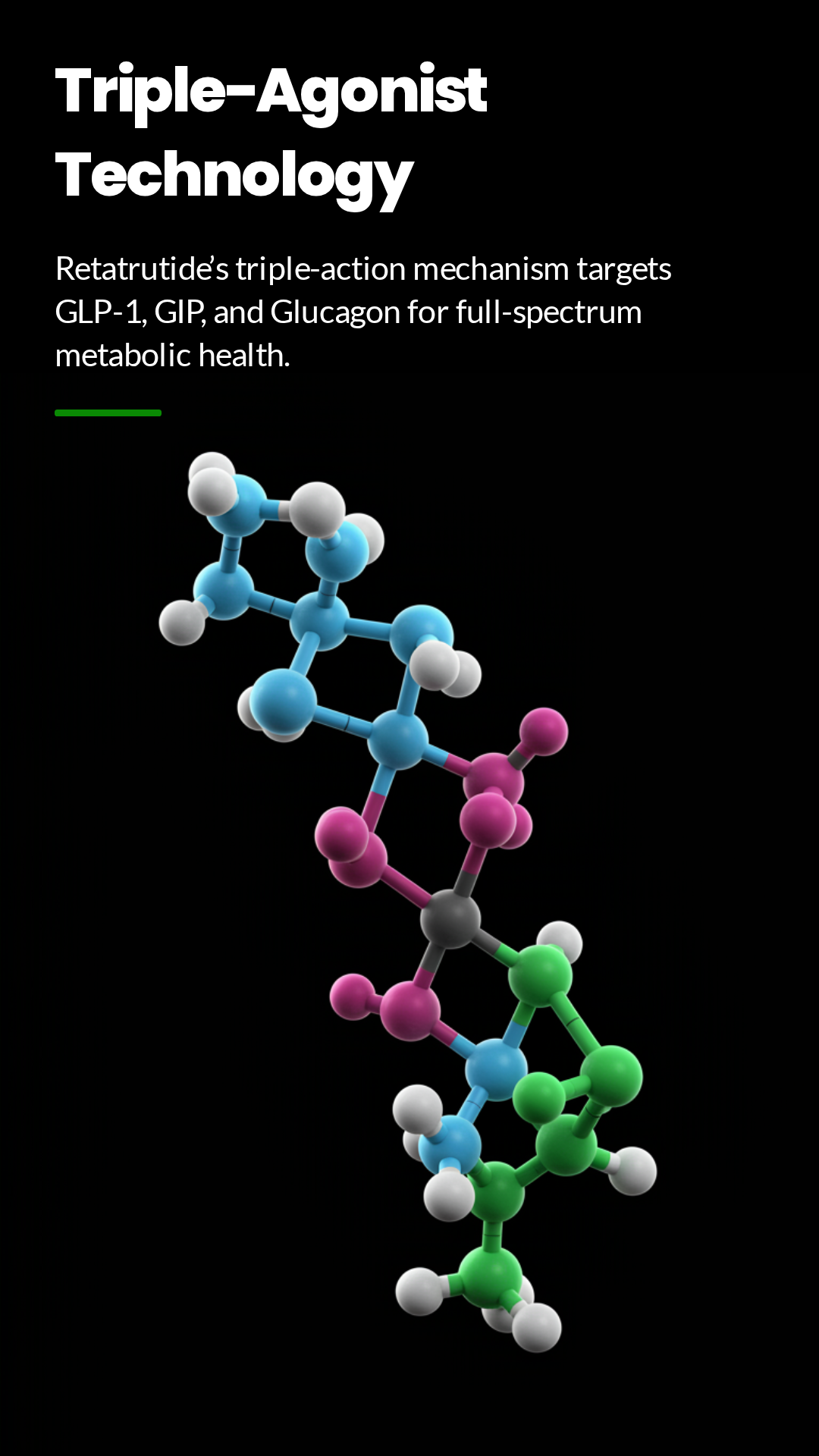
Retatrutide is a next-generation research peptide studied for its effects on metabolic signaling pathways. It is classified as a triple-agonist peptide, meaning it interacts with three key hormone receptors involved in energy balance and metabolism.
In research settings, Retatrutide has gained attention due to its broader receptor activity compared to earlier GLP-1–based compounds.
How Does Retatrutide Work?
Retatrutide works by activating three metabolic receptors commonly studied in weight-regulation research:
- GLP-1 (glucagon-like peptide-1)
- GIP (glucose-dependent insulinotropic polypeptide)
- Glucagon receptors
By targeting multiple pathways simultaneously, Retatrutide is studied for its potential to influence appetite signaling, energy expenditure, and metabolic efficiency.
What Is Retatrutide Used for in Research?
In laboratory and clinical research environments, Retatrutide is primarily studied for:
- Metabolic research
- Weight-regulation pathways
- Energy balance signaling
- Appetite-related hormone interactions
It is not FDA-approved and is intended strictly for research and educational purposes.
How Do You Take Retatrutide in Research Settings?
In research protocols, Retatrutide is most commonly studied using subcutaneous administration.
Key research considerations include:
- Consistent dosing schedules
- Controlled concentration accuracy
- Gradual dose escalation in studies
Administration methods vary depending on study design and research objectives.
What Is the Typical Retatrutide Dosage Used in Research?
Research literature commonly references low starting doses, followed by gradual increases.
Note: This information is derived from clinical trial data (NCT04881760) and is for educational reference only.
| Phase | Dosage (Weekly) | Duration |
|---|---|---|
| Initiation | 2 mg or 4 mg | Weeks 1-4 |
| Escalation | Increase by 2-4 mg | Every 4 weeks |
| Maintenance | 8 mg to 12 mg | Continuous |
*Dosages are administered via subcutaneous injection once weekly.
How Often Is Retatrutide Taken in Research Studies?
Most published research protocols study Retatrutide on a once-weekly schedule, though frequency may vary depending on the design of the study.
Weekly dosing allows researchers to observe longer-acting metabolic effects while monitoring tolerance and response.
Where can I buy Retatrutide for research?
Retatrutide for research purposes can be sourced from specialized chemical supply companies like BioPharma. We provide high-purity research peptides that meet strict laboratory standards.
Researchers can purchase lyophilized Retatrutide directly from our secure store. Please ensure you have the appropriate laboratory setup for reconstitution and storage before ordering.
Retatrutide 10mg
High-purity lyophilized powder for advanced metabolic research. View Product : GLP-3 (Ret) 10mg
Research Value
Retatrutide 5mg
Ideal starting quantity for initial pilot studies and titration protocols. View Product : GLP-3 (Ret) 5mg
Compliance Note: All products sold by BioPharma are labeled “For Research Purposes Only”. They are not intended for human consumption, and we do not provide medical advice.
What is the timeline to see results?
Weeks 1-4
Appetite suppression is often immediate. Initial water weight loss occurs.
Weeks 8-12
Significant fat loss becomes measurable. Metabolic markers (blood glucose) improve.
Week 24-48
Peak efficacy reached. Maximum weight reduction observed in clinical trials..
How Long Does It Take to Observe Research Effects?
In studies, observable effects are often reported within the first few weeks, with continued changes measured over longer durations.
Timing depends on:
- Dose escalation speed
- Study duration
- Individual metabolic variables within research subjects
What Side Effects Are Observed in Research?
Reported research-observed effects may include:
- Temporary gastrointestinal discomfort
- Appetite changes
- Fatigue during dose adjustments
All findings are study-specific and occur under controlled conditions.
Is Retatrutide the Same as Semaglutide or Tirzepatide?
No. While all three are studied in metabolic research, Retatrutide differs because:
- Semaglutide targets GLP-1 only
- Tirzepatide targets GLP-1 and GIP
- Retatrutide targets GLP-1, GIP, and glucagon receptors
This broader receptor activity is what makes Retatrutide distinct in research.
Is Retatrutide Approved for Human Use?
No. Retatrutide is not FDA-approved and is not intended for human consumption.
It is sold strictly for:
- Laboratory research
- Scientific education
- In-vitro or controlled research environments
Important Safety & Research Disclaimer
Retatrutide is a research compound only.
It is not a drug, supplement, or treatment.
All information provided is for educational and informational purposes and should not be interpreted as medical advice.
Summary
Retatrutide represents a promising area of metabolic research due to its triple-agonist design. While early studies are compelling, it remains strictly within the research domain and should be handled accordingly.