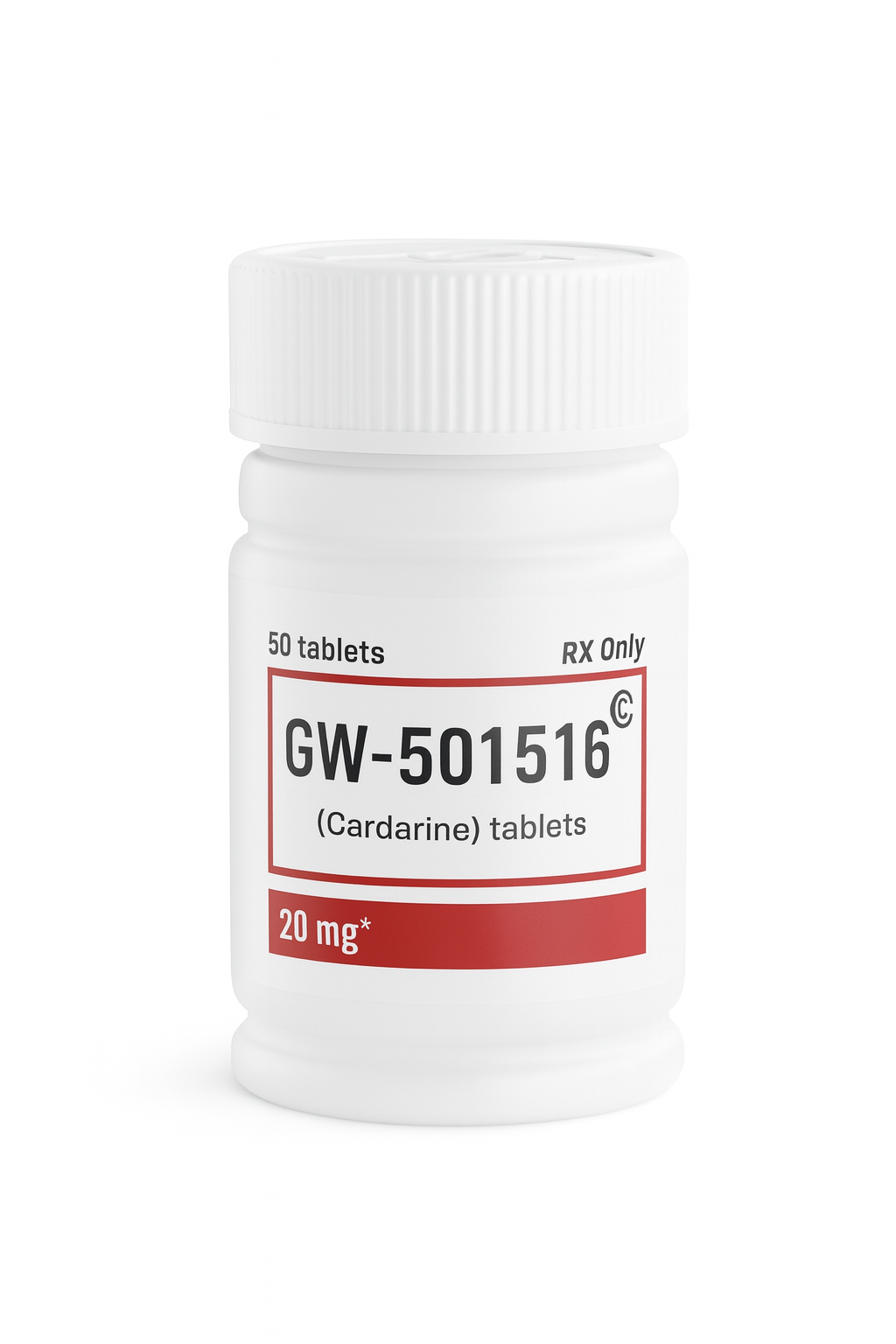
GW-501516 (Cardarine) — Research Overview
GW-501516 is a synthetic PPARδ (peroxisome proliferator-activated receptor delta) agonist, also designated GW1516 or GSK-516. It was originally developed by GlaxoSmithKline and Ligand Pharmaceuticals as part of a metabolic disease research program. Although frequently grouped with SARMs in performance research discussions, GW-501516 operates through an entirely different receptor mechanism — PPARδ rather than the androgen receptor.
Mechanism of Action
PPARδ (also called PPARβ/δ) is a ligand-activated nuclear receptor that regulates gene expression involved in fatty acid oxidation, glucose utilization, and mitochondrial function. Upon GW-501516 binding, PPARδ heterodimerizes with RXR (retinoid X receptor) and binds PPAR response elements (PPREs) in target gene promoters. This activates transcription of:
- CPT1 (carnitine palmitoyltransferase 1) — rate-limiting enzyme in mitochondrial fatty acid transport
- PDK4 (pyruvate dehydrogenase kinase 4) — shifts substrate preference from glucose to fatty acids
- ABCA1 (ATP-binding cassette transporter A1) — increases reverse cholesterol transport
- UCP3 (uncoupling protein 3) — thermogenic uncoupling in skeletal muscle mitochondria
Research Applications
GW-501516 has been studied extensively in preclinical models across several fields:
- Metabolic syndrome research: Insulin sensitivity, dyslipidemia, and fatty acid oxidation in obesity models
- Endurance physiology: Mitochondrial biogenesis and fiber-type switching in skeletal muscle — landmark mouse studies showed significant increases in running endurance without training
- Cardiovascular research: HDL cholesterol elevation, reverse cholesterol transport, and atherosclerosis models
- Muscle fiber composition: Fast-to-slow (Type IIb → Type I) fiber-type transition studies
- NASH/NAFLD models: Hepatic lipid accumulation and inflammatory marker studies
- PPARδ receptor pharmacology: Selectivity studies vs. PPARα and PPARγ agonists
Important Research Context
GW-501516’s clinical development was discontinued after preclinical carcinogenicity studies revealed dose-dependent tumor formation in multiple organ systems in rodent models. This discontinuation makes it a compound of significant pharmacological interest — researchers study both the carcinogenic mechanisms (rapid proliferation of pre-neoplastic cells, PPARδ-mediated anti-apoptotic signaling) and the metabolic benefits observed at sub-carcinogenic exposures. Research use requires appropriate institutional safety review.
Pharmacokinetic Profile
GW-501516 is orally bioavailable with high protein binding (>99.9%). It undergoes extensive oxidative metabolism via CYP3A4, producing sulfoxide and hydroxylated metabolites. Half-life is approximately 16–24 hours in preclinical models. It distributes widely into tissues including fat, liver, and skeletal muscle — consistent with its role as a PPARδ agonist targeting lipid-metabolizing tissues.
Supplied For
Research and laboratory use by qualified investigators under appropriate institutional safety and ethical oversight. Not for human consumption. Certificate of Analysis available upon request.

Reviews
There are no reviews yet.