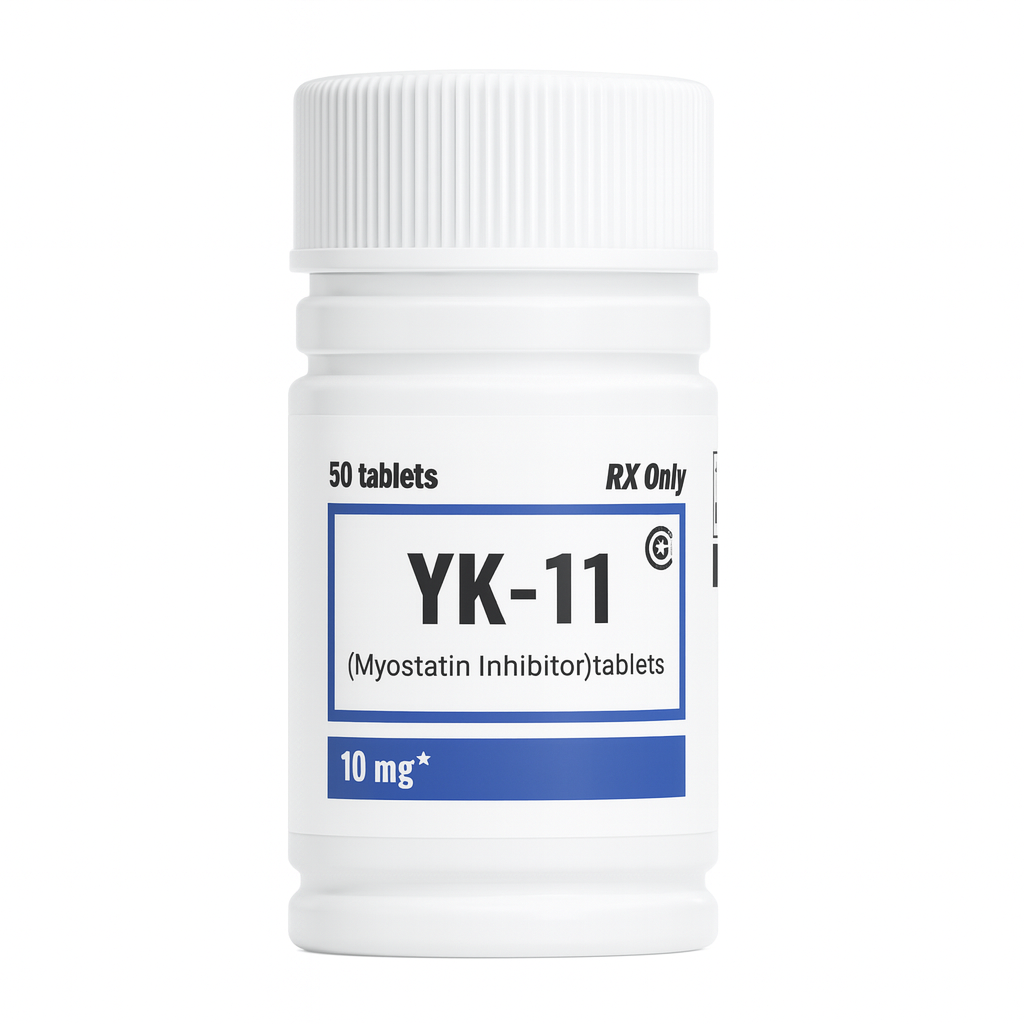
YK-11 — Research Overview
YK-11 occupies a unique pharmacological niche among research compounds: it is both a partial androgen receptor (AR) agonist and a myostatin inhibitor via follistatin induction. This dual mechanism is not shared by conventional SARMs (which act solely via AR) or myostatin inhibitors (which typically work via antibody-mediated TGF-β pathway blockade). YK-11’s steroidal structure (derived from 5α-dihydrotestosterone) further distinguishes it from non-steroidal SARMs.
Mechanism of Action
Androgen Receptor Agonism: YK-11 binds the androgen receptor’s ligand-binding domain and activates AR-mediated transcription. However, unlike full agonists such as testosterone or LGD-4033, it only partially activates the receptor — recruiting a subset of coactivators. This partial agonism profile may produce AR-dependent anabolic effects with reduced androgenic gene program activation.
Myostatin Inhibition via Follistatin: Myostatin (GDF-8) is a TGF-β family member that acts as a negative regulator of skeletal muscle mass. Myostatin null mutations in animals produce dramatic muscle hypertrophy — demonstrating the pathway’s anabolic ceiling role. YK-11 has been shown in C2C12 myoblast studies (Kanno et al., 2013) to upregulate follistatin mRNA and protein expression. Follistatin binds and neutralizes myostatin (and activin A), releasing the myostatin-imposed ceiling on muscle growth. This second mechanism is entirely independent of AR signaling.
Research Applications
YK-11’s dual mechanism supports research in:
- Myostatin pathway pharmacology: Follistatin-mediated myostatin inhibition as an alternative to antibody-based approaches
- Muscle biology: C2C12 differentiation studies, myotube formation, and hypertrophy gene program characterization
- Partial AR agonist pharmacology: Coactivator selectivity and transcriptional profiling vs. full AR agonists
- Muscle wasting diseases: Duchenne muscular dystrophy models, cachexia, sarcopenia — studying dual-pathway anabolic interventions
- Follistatin-activin biology: Activin A suppression downstream of follistatin upregulation — relevant in reproductive biology and cancer research
- Steroidal vs. non-steroidal SARM comparisons: YK-11’s DHT-derived structure provides a steroidal AR agonist comparator for structure-activity relationship (SAR) studies
Structural Chemistry
YK-11’s chemical name is (17α,20E)-17,20-[(1-methoxyethylidene)bis(oxy)]-3-oxo-19-norpregna-4,20-diene-21-carboxylic acid methyl ester. Its steroidal scaffold with C17 methyl ester modification confers partial AR agonist activity and distinguishes its binding kinetics from non-steroidal SARMs. The structural similarity to DHT allows AR binding but the unique C-ring modification alters the receptor conformation relative to full agonists.
Key Research Caveat
Most published YK-11 data comes from in vitro cell studies (primarily C2C12 myoblasts). In vivo pharmacokinetics and comprehensive tissue-selectivity data are not yet published to the extent seen for LGD-4033, RAD-140, or MK-2866. Researchers using YK-11 in animal models should design appropriate dose-finding and PK characterization studies as part of their research protocol.
Supplied For
Research and laboratory use by qualified investigators under appropriate institutional and ethical oversight. Not for human consumption. Certificate of Analysis available upon request.

Reviews
There are no reviews yet.