
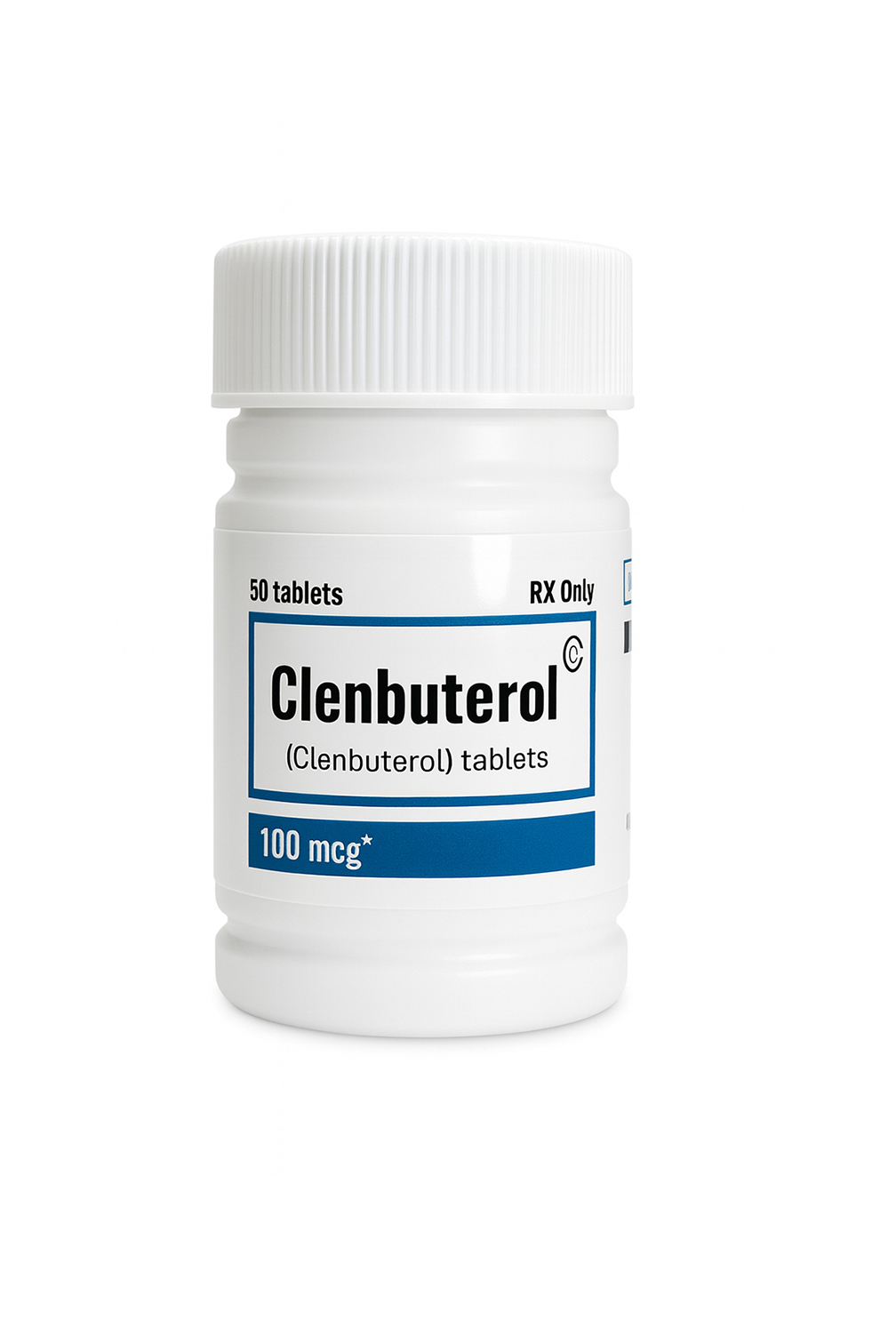

Clenbuterol — Research Overview
Clenbuterol hydrochloride is a long-acting, selective beta-2 adrenergic receptor (β2-AR) agonist. While developed primarily as a bronchodilator for respiratory conditions, it has become a well-documented research compound in studies examining sympathomimetic pharmacology, thermogenesis, lipolysis, and anabolic signaling in skeletal muscle.
Mechanism of Action
Clenbuterol binds selectively to β2-adrenergic receptors, activating adenylyl cyclase via Gs protein coupling. This increases intracellular cyclic AMP (cAMP), which activates protein kinase A (PKA). PKA-mediated phosphorylation produces multiple downstream effects depending on tissue type:
- Smooth muscle (bronchi): Relaxation and bronchodilation
- Adipose tissue: Activation of hormone-sensitive lipase → increased fatty acid liberation (lipolysis)
- Skeletal muscle: Anabolic and anti-catabolic signaling via IGF-1 and PI3K pathways
- Thermogenic tissues: Increased ATP turnover and heat production
Research Applications
Clenbuterol is used across several research domains:
- Metabolic research: Studying thermogenic and lipolytic effects in fat cell models
- Muscle wasting models: Anti-catabolic research in cachexia, sarcopenia, and denervation atrophy
- Respiratory pharmacology: Bronchodilation potency and duration comparisons
- Adrenergic receptor pharmacology: β1 vs. β2 selectivity studies
- Cardiac research: β2-AR stimulation effects on cardiac hypertrophy and remodeling
- Performance physiology: Oxygen-carrying capacity and endurance in animal models
Pharmacokinetic Profile
Clenbuterol is well-absorbed orally with approximately 70–80% bioavailability. It is not significantly metabolized by CYP enzymes, with the majority excreted unchanged in urine. The long elimination half-life of 26–48 hours contributes to sustained receptor exposure and is a key consideration in research dosing interval design. Protein binding is approximately 50%.
Key Research Considerations
Clenbuterol demonstrates receptor downregulation with prolonged exposure — β2-ARs become desensitized through phosphorylation and internalization. Research protocols must account for tolerance development, often using cycling strategies to maintain receptor sensitivity. This downregulation phenomenon itself is an active area of adrenergic receptor biology research.
Supplied For
Research and preclinical laboratory use by qualified professionals under appropriate regulatory oversight. Not for human consumption. Certificate of Analysis available upon request.


Reviews
There are no reviews yet.