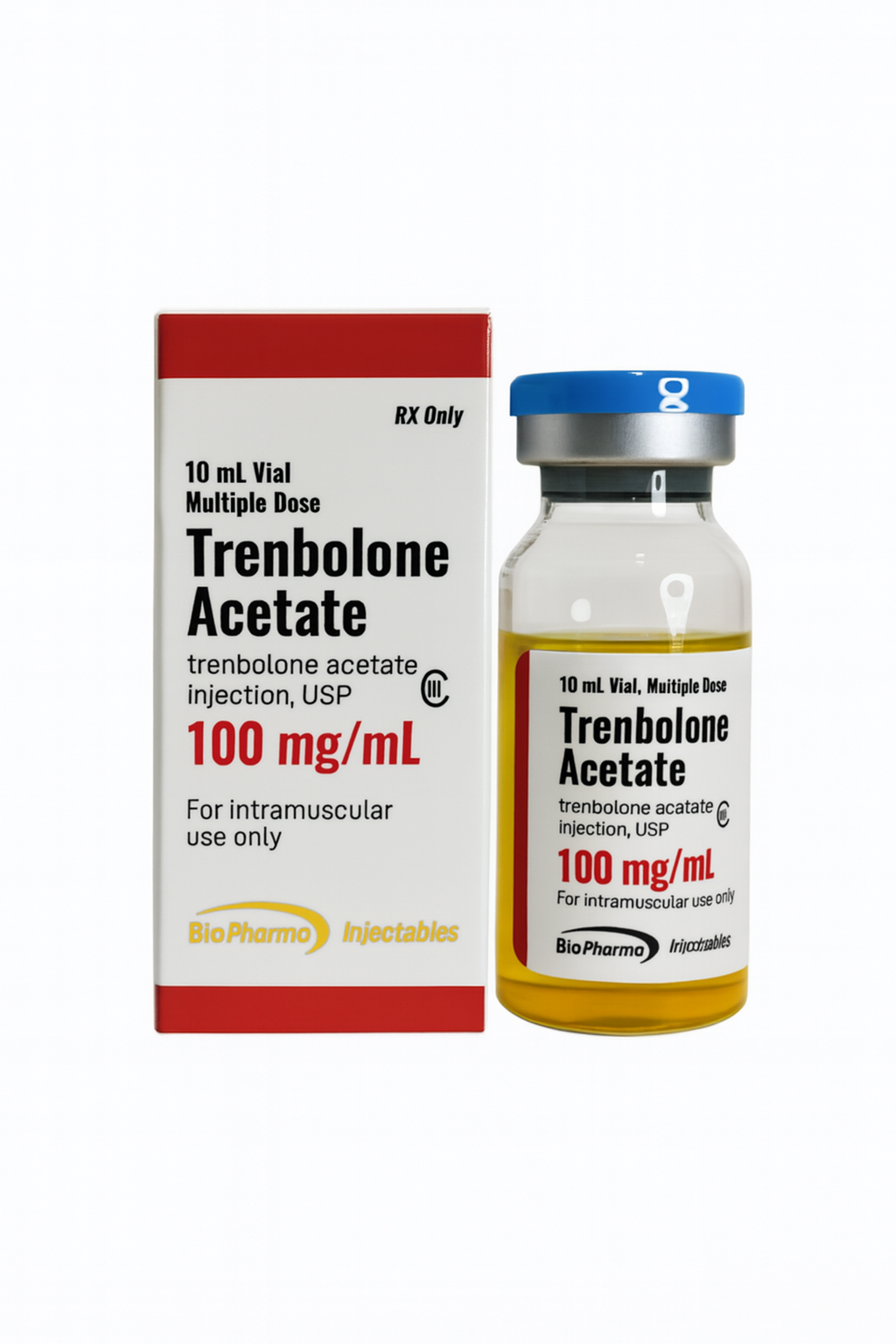
Trenbolone Acetate — Research Overview
Trenbolone acetate is a synthetic 19-nor (19-nortestosterone) anabolic-androgenic steroid delivered as a short-chain acetate ester. It is structurally derived from nandrolone with the addition of double bonds at C9 and C11, which dramatically increase its androgen receptor binding affinity and metabolic resistance. Trenbolone is notable for combining extremely high AR affinity with no aromatization and significant progestogenic activity — a pharmacological profile unique among commonly studied AAS.
Mechanism of Action
Trenbolone binds to androgen receptors with approximately 5-fold greater affinity than testosterone (relative binding affinity ~100 vs. testosterone ~100 at the glucocorticoid receptor, but ~500 at AR in some assays). Key mechanistic features:
- AR agonism: High-affinity AR binding drives anabolic gene programs in skeletal muscle — nitrogen retention, protein synthesis upregulation, anti-catabolic effects
- Glucocorticoid receptor antagonism: Trenbolone competitively binds glucocorticoid receptors (GR), blocking cortisol-mediated catabolism — a mechanism distinct from testosterone
- IGF-1 upregulation: Trenbolone strongly upregulates IGF-1 mRNA and protein in muscle tissue, contributing to satellite cell activation and hypertrophy beyond direct AR effects
- Progestogenic activity: Binds progesterone receptors (PR) with moderate affinity — relevant in reproductive biology and gynecomastia mechanism research
- No aromatization: The C9-C11 double bonds prevent aromatase from metabolizing trenbolone to estrogen, making it a clean non-estrogenic androgen for research designs requiring estrogen elimination
Research Applications
Trenbolone appears in diverse research contexts:
- AR binding pharmacology: High-affinity AR ligand for displacement assays, receptor occupancy studies, and SAR research
- Non-aromatizable androgen research: Studying pure AR-mediated anabolic effects without estrogen confounders
- Glucocorticoid antagonism: Anti-catabolic mechanisms independent of AR — cortisol/GR signaling studies
- IGF-1 pathway research: IGF-1-mediated satellite cell activation and muscle hypertrophy studies
- Progestogen pharmacology: PR agonism in reproductive biology, galactorrhea models, and gynecomastia research
- Metabolite profiling: Trenbolone’s urinary metabolites (17α-trenbolone, 17β-trenbolone) are studied in forensic pharmacology and sports drug testing research
- CNS androgen effects: AR expression in limbic and hypothalamic regions — trenbolone’s neurological activity is studied in behavioral neuroendocrinology
Pharmacokinetic Profile — Acetate Ester
The acetate ester confers a short active-release profile: peak plasma concentrations occur within 24–48 hours of administration, with active half-life of approximately 2–3 days. This short duration is advantageous in research protocols requiring precise timing of androgen exposure windows and rapid pharmacokinetic studies. The free base trenbolone has much shorter duration without the ester. Trenbolone is not substrate for aromatase or 5α-reductase, and its primary metabolic pathway involves ketone reduction at C17 and subsequent conjugation.
Supplied For
Research and laboratory use by qualified professionals under appropriate regulatory and ethical frameworks. Not for human consumption. Certificate of Analysis available upon request.

Reviews
There are no reviews yet.